
Kastania Cave (St. Andrew’s Cave)
One of the most impressive caves in Greece lies well-hidden at the southeastern tip of the Peloponnese!
The lush mountainous route to the cave follows the eastern foothills of Mount Parnon, which gradually descend toward Cape Maleas, overlooking the Myrtoan Sea.
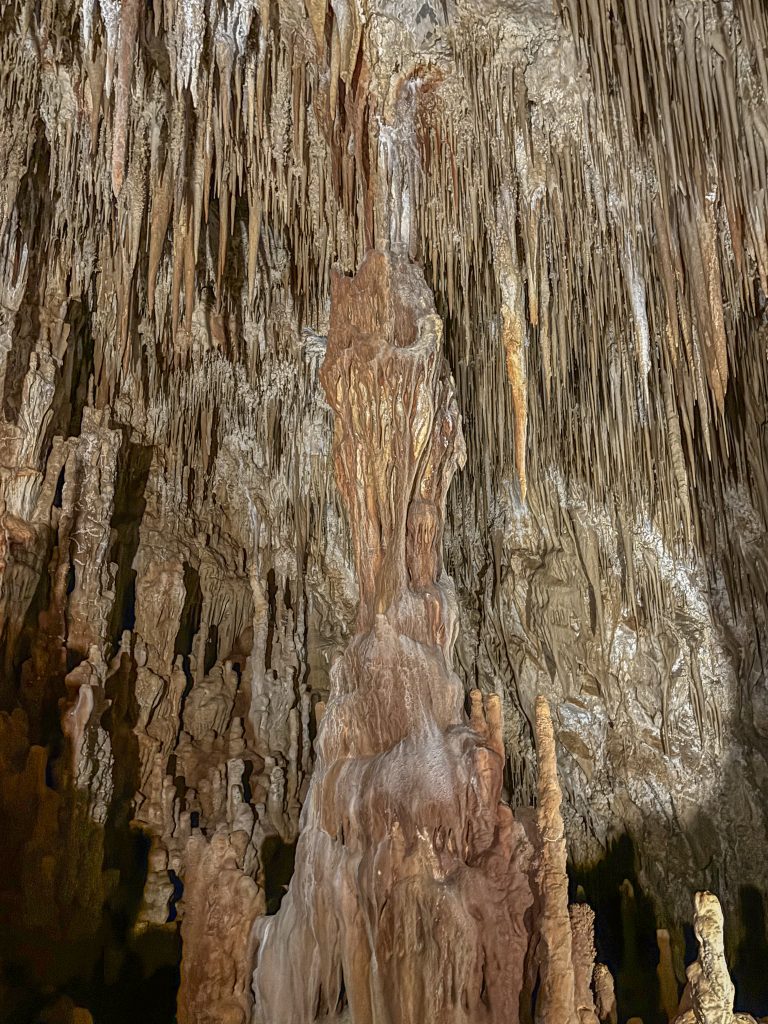
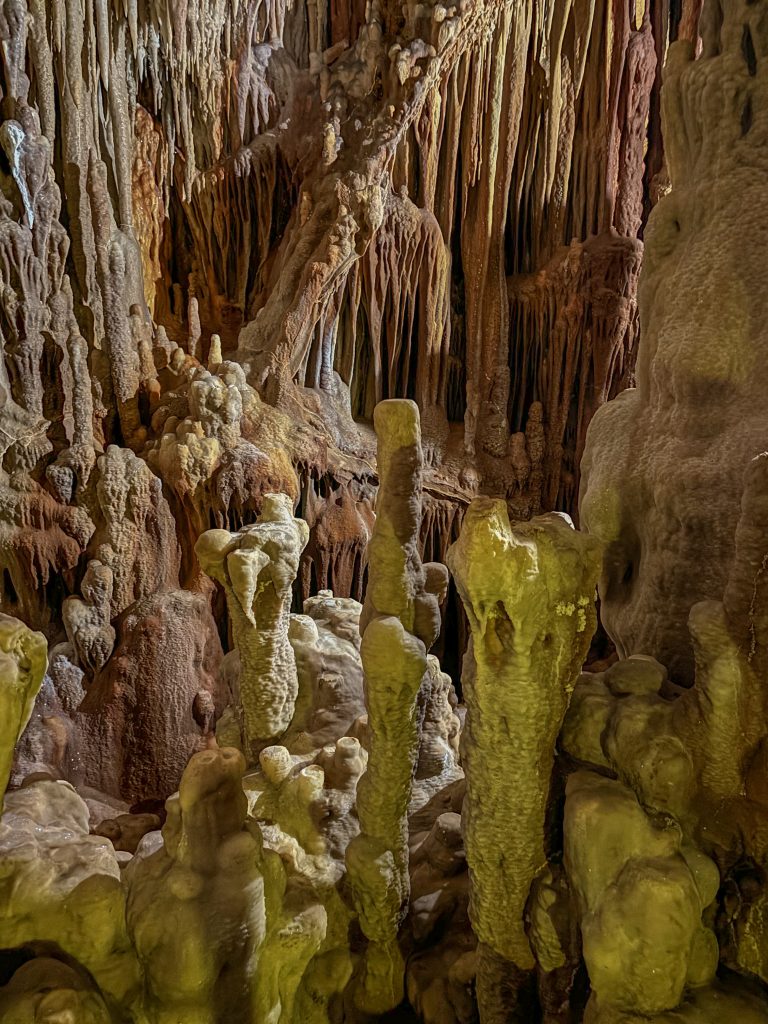
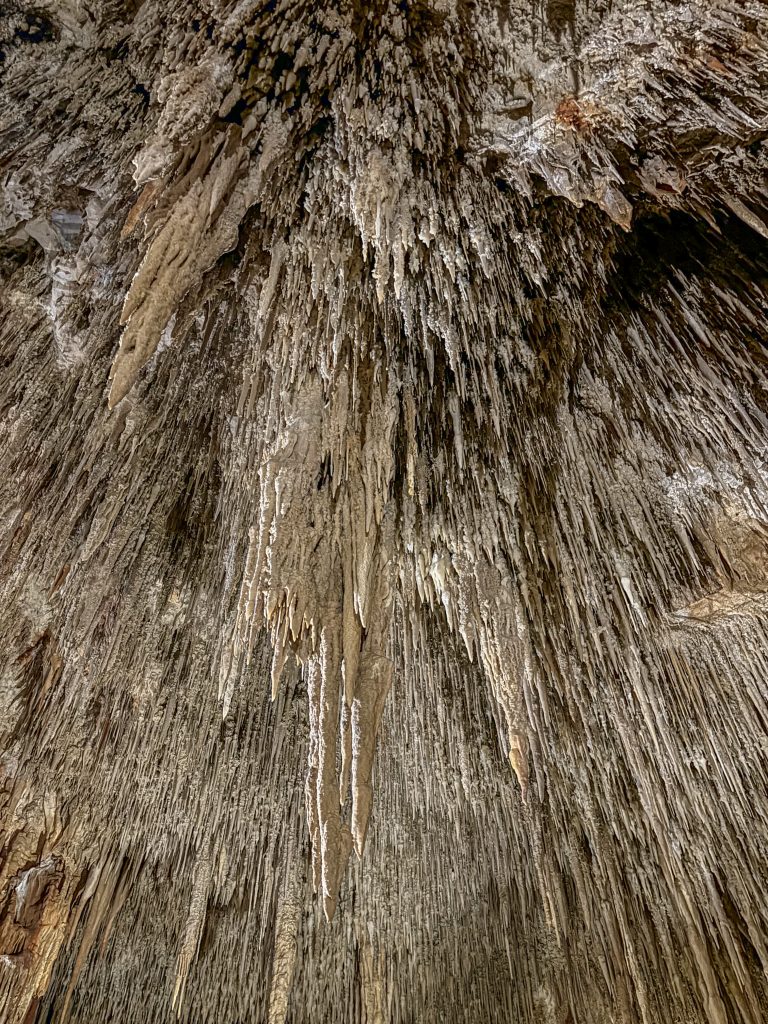
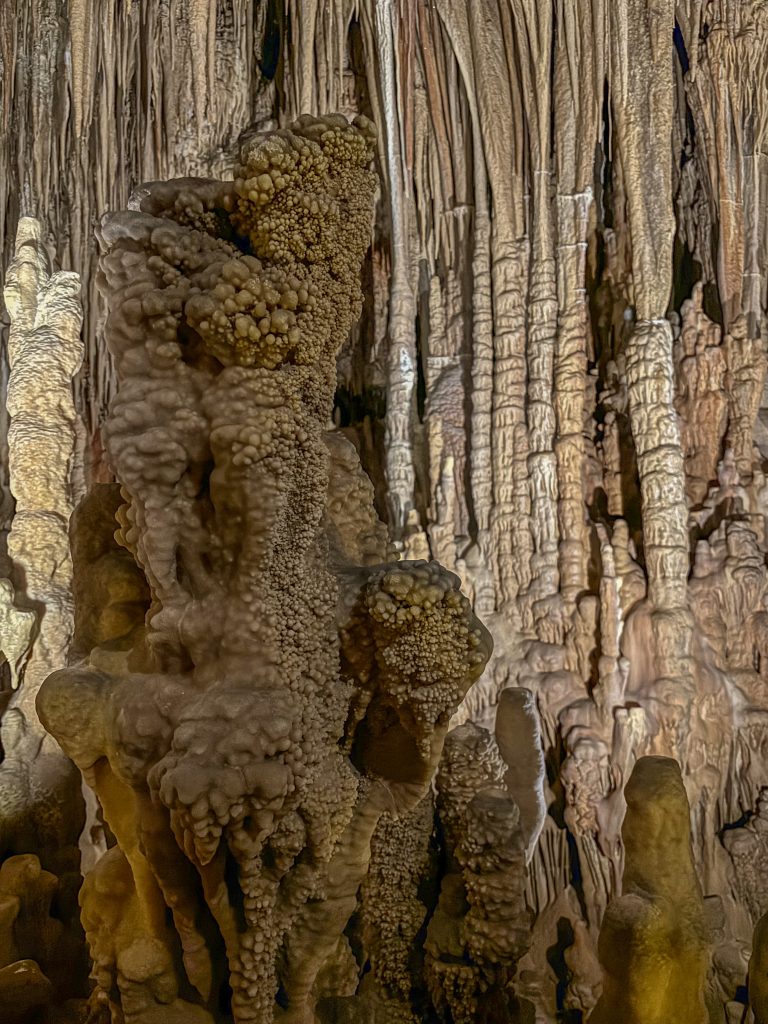
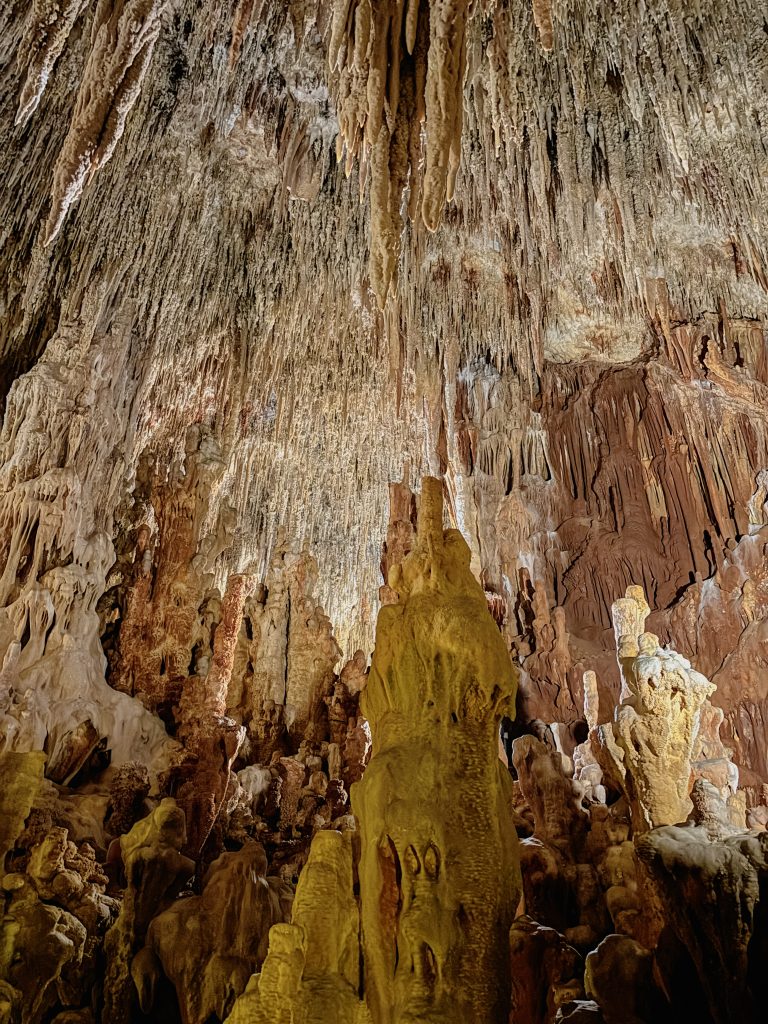
It took over three million years of sculpting the cave’s unparalleled speleothem formations, creating shapes and structures born of boundless imagination.
Rare formations, such as discs, flat stalagmites, eccentric stalactites (also known as eccentrics), and helictites, have a prominent presence in the cave, offering unique highlights for every visitor.
Formed millions of years ago within Jurassic limestones of the so-called “Tripolis” geotectonic unit, the cave took shape in the aftermath of intense geological upheavals. What followed was a long, active phase of dripwater activity and mineral-rich sedimentation. Over time, these slow natural processes created the cave’s speleothems—crystalline formations of calcium carbonate laced with metal oxides from the subsoil. The result? A breathtaking palette of seven natural colors that make the cave truly one of a kind.
In the early 20th century, a shepherd named Kostas Stivaktas noticed that bees emerging from a hole near the small chapel of St. Andrew, west of the village of Kato Kastania in the Voies region, were never thirsty. Curious, he opened a small fissure in the ground and discovered a natural wonder, which he and his descendants kept secret from the local community for many years. They would enter the cave carrying burning aphana (a local shrub) for light and collect water from a small basin to meet the needs of their livestock.
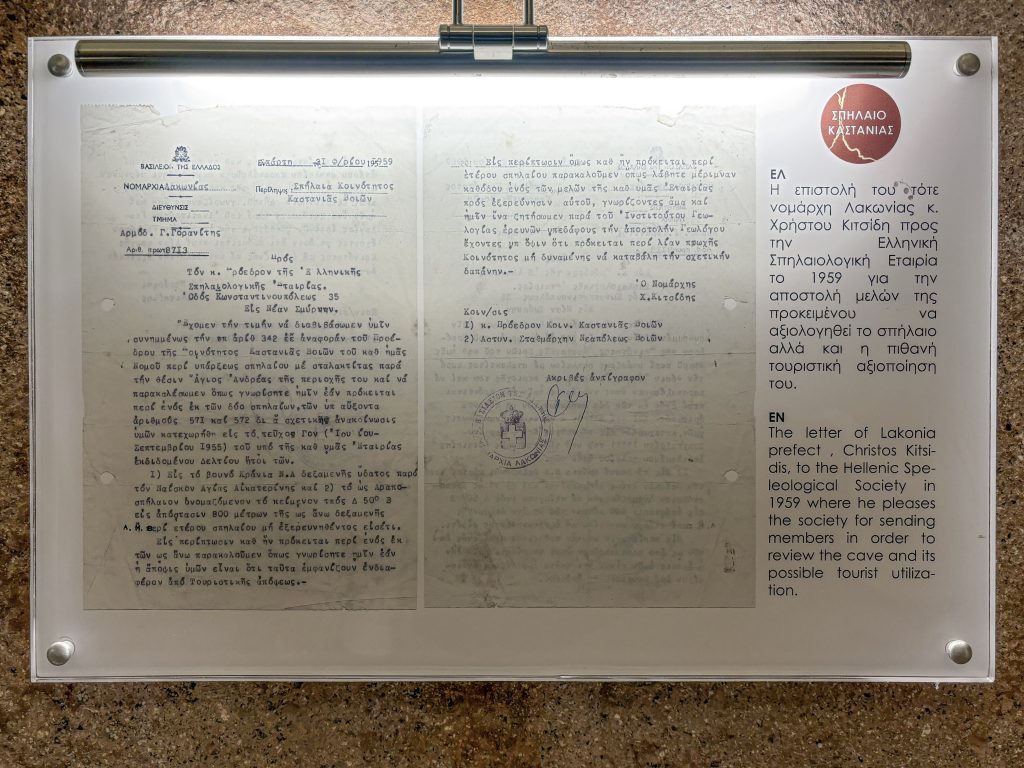
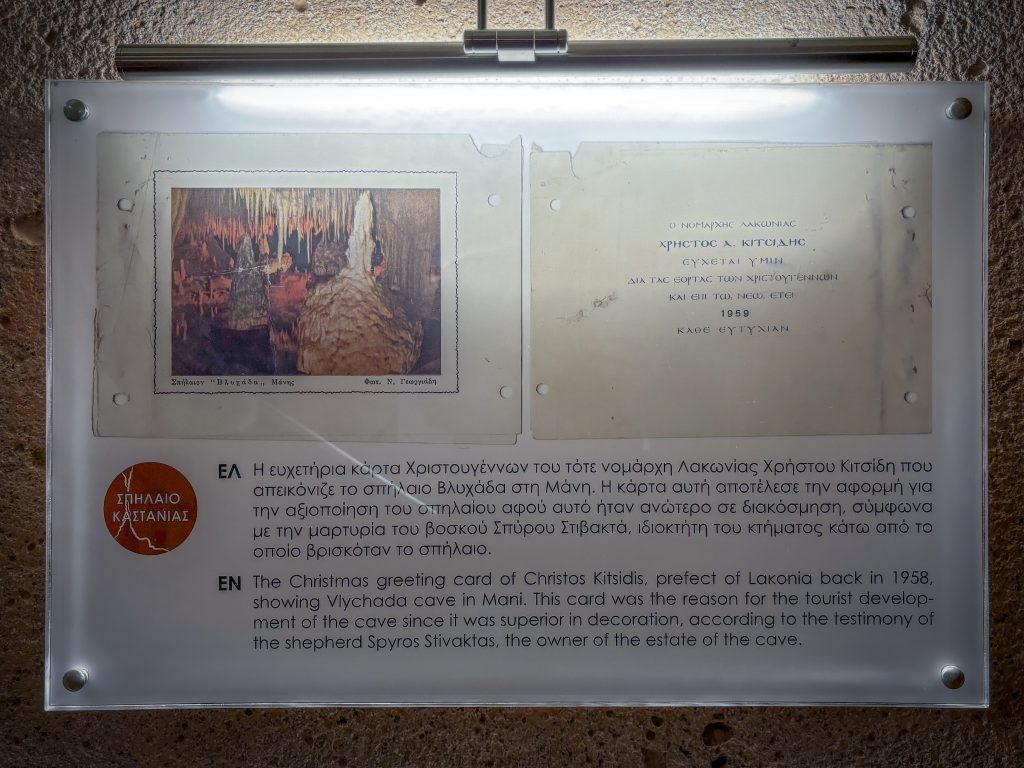
This continued until 1958, when the shepherd saw a postcard depicting a cave and realized the significance of his discovery. From that point on, the cave became more widely known, and its protection and development were entrusted to the local community of Kastania, formerly part of the Municipality of Voies.
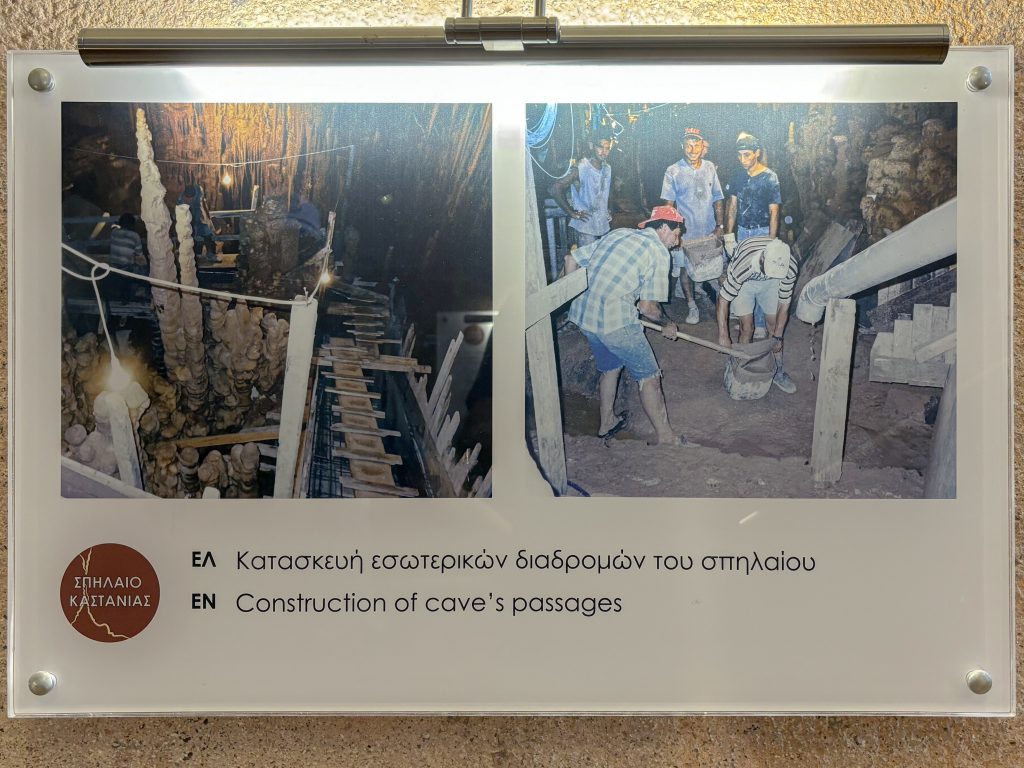
Spanning 1,500 square meters across two distinct levels, the cave features a 500-meter-long visitor walkway that invites exploration. Its development was carried out with utmost respect for the surrounding natural landscape, blending seamlessly into the environment. The interior enhancements have been praised by the Ephorate of Paleoanthropology and Speleology as “exemplary in their attention to detail.”
Today, directly above the cave’s underground entrance, visitors can see the very spot where, a century ago, the shepherd dug into the earth and first laid eyes on this extraordinary geological marvel.
Research, and text editing: Andreas Andrikopoulos








 English
  Greek
Greek